kitesurf in morocco: Kitesurf Maroc Travel Guide 2026
Welcome to the ultimate guide for kitesurfing adventures in Morocco! This stunning country offers a unique blend of reliable winds, beautiful Atlantic beaches, and rich history. Whether you seek the thrill of riding the waves or exploring ancient cities, Morocco has it all.
Imagine spending your days in Dakhla, where over 300 windy days a year create the perfect conditions for kite enthusiasts. Alternatively, visit Essaouira, a coastal gem with a medina that has stood for more than 2,500 years. Each destination offers its own distinct charm and experiences.
This guide will help you navigate your trip by providing essential information on choosing the right kite destination, selecting travel dates, and understanding local conditions. You’ll also find tips on planning your equipment for various skill levels.
For a practical Moroccan kite holiday, look no further than KITESURFMOROCCO and KITESURF MAROC. These resources will assist you in organizing your adventure, including comparing airport access, accommodation, and local transportation options.
Discovering the Charm of Moroccan Kitesurfing
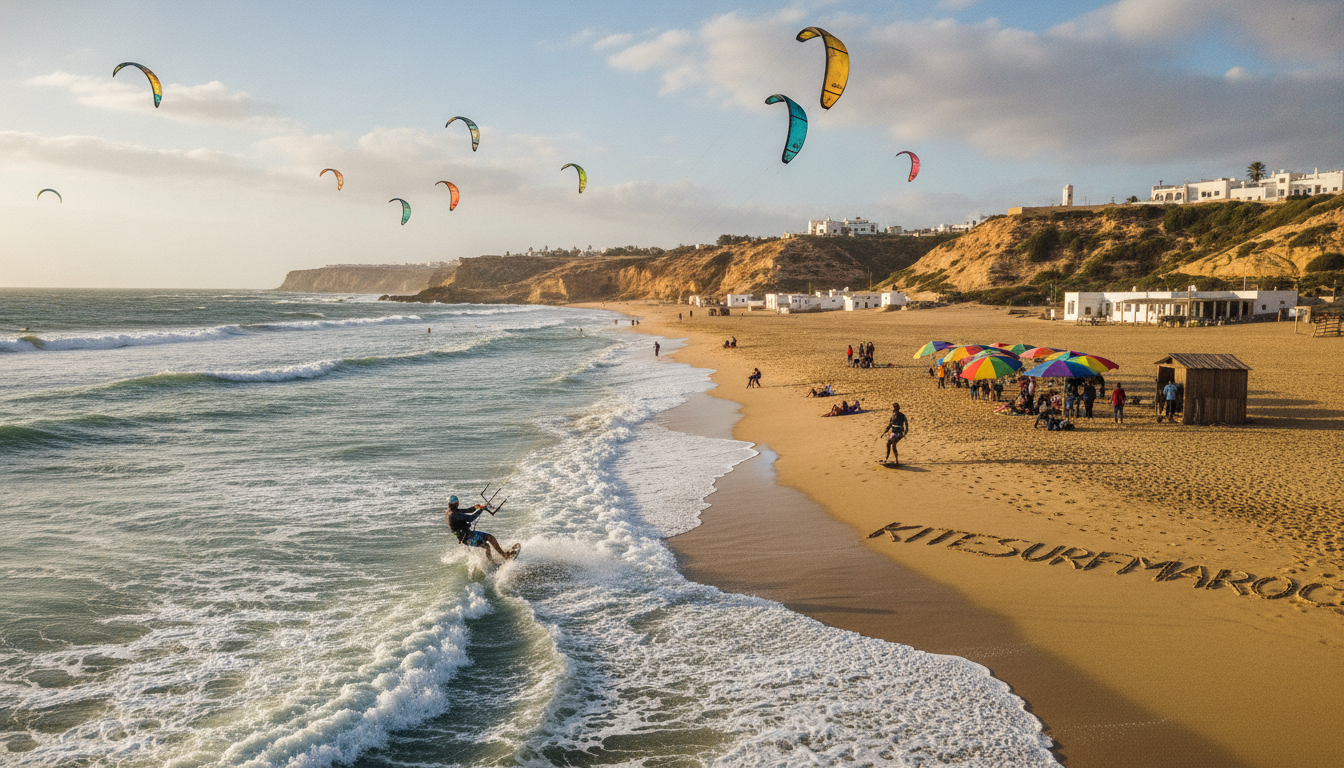
Experience the exhilarating winds and rich heritage that make Morocco a kitesurfing paradise. This country is a haven for riders seeking dependable Atlantic winds, varied waves, and accessible beaches.
Essaouira, known as the “Little Fortress,” has served as a vibrant meeting point for European, African, and Arab communities for over 2,500 years. This unique cultural blend enriches your kitesurfing adventure.
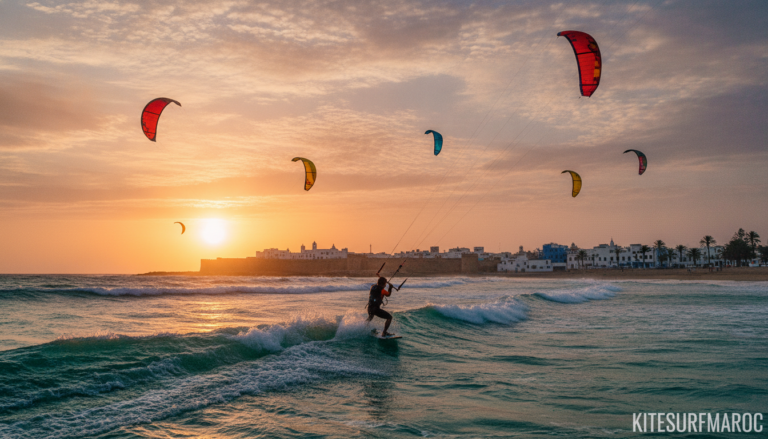
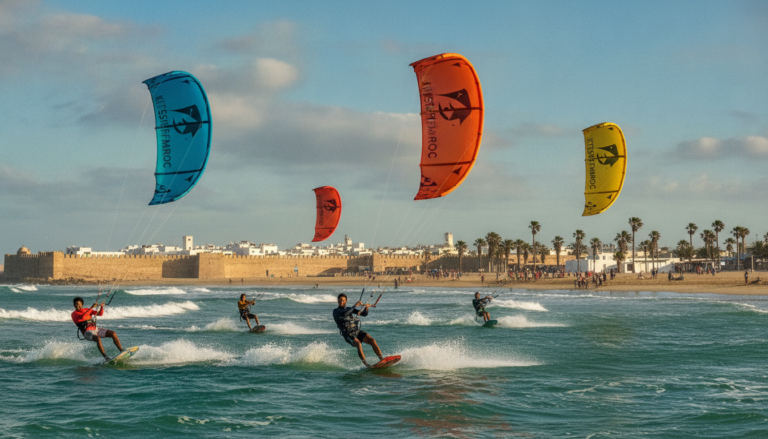
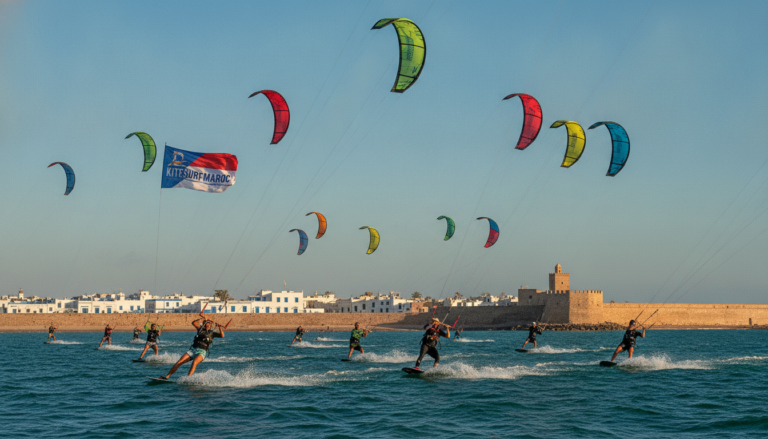
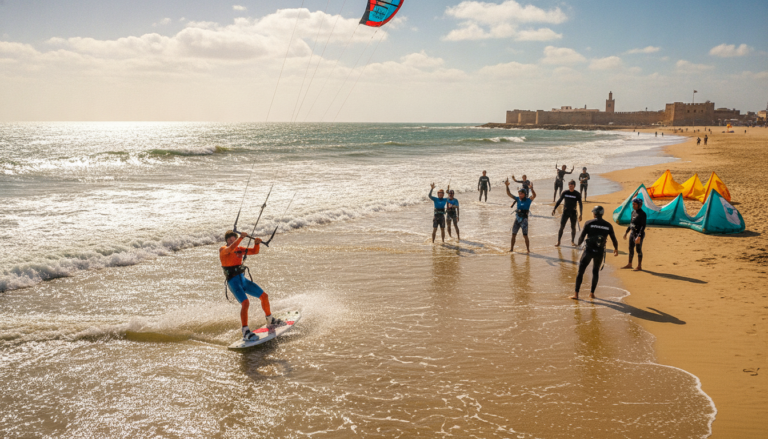
The Essaouira medina is filled with colorful markets, allowing visitors to balance thrilling riding sessions with historic sightseeing. The beach is just a quick 10-minute walk from the old town, making it convenient for all.
Morocco offers a welcoming atmosphere where respectful behavior enhances your experience. As you explore this captivating country, you’ll find that its culture and stunning coast create the perfect backdrop for your kitesurfing journey.
Planning Your kitesurf in morocco Adventure
A successful kitesurfing adventure hinges on knowing when and where to go. For those eager to ride the waves, understanding the seasons is key. Essaouira’s main kitesurfing season runs from late March through September. During this time, riders can expect wind speeds of 15-25 knots, especially in the afternoons.
On the other hand, Dakhla offers prime conditions from April to October. Here, wind speeds can reach 15-35 knots, making it ideal for both beginners and experienced surfers. July and August are particularly favorable, with over 90% wind probability. However, these months can also bring gusty conditions that may challenge less experienced riders.
Travelers should prepare for Dakhla’s daytime temperatures, which typically range from 22-29°C. Calm days can soar to 40°C, while cooler mornings offer a refreshing start. For first-time visitors, seeking lessons and school support can enhance the experience and ensure safety.
Top Kitesurf Spots & Kite Schools in Morocco
Dive into the best spots for kitesurfing that Morocco has to offer. This country boasts diverse locations catering to all skill levels, from beginners to advanced riders.
In Essaouira, you can start at Essaouira Bay, known for its shallow water and soft sandy bottom. The side-shore trade winds here make it perfect for lessons and beginners. Just north, Moulay Bouzerktoun offers larger waves, reaching up to 3 meters from March to June, ideal for more experienced surfers.
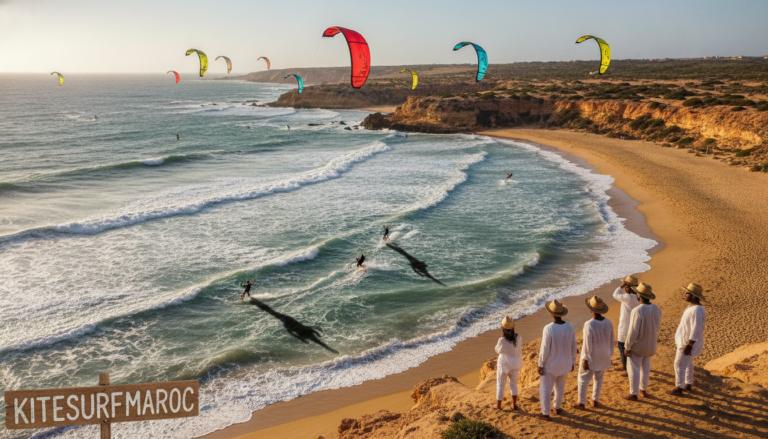
For advanced riders, consider Sidi Kaouki with its strong currents and powerful shore breaks. La Grotte and Imsouane also provide thrilling waves, with Imsouane’s La Bay stretching nearly 3 kilometers.
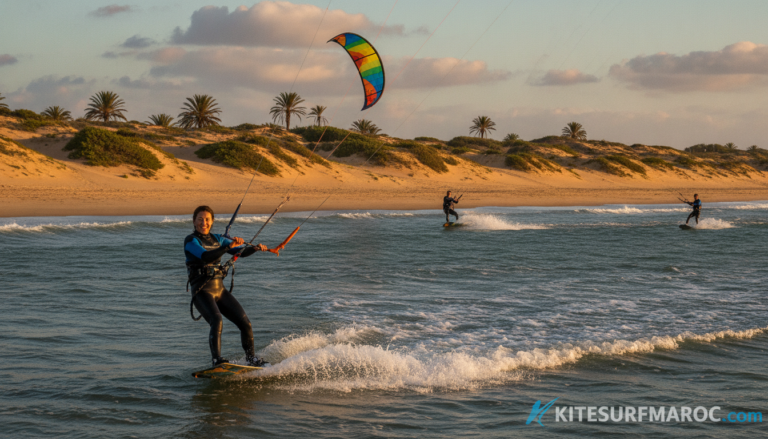
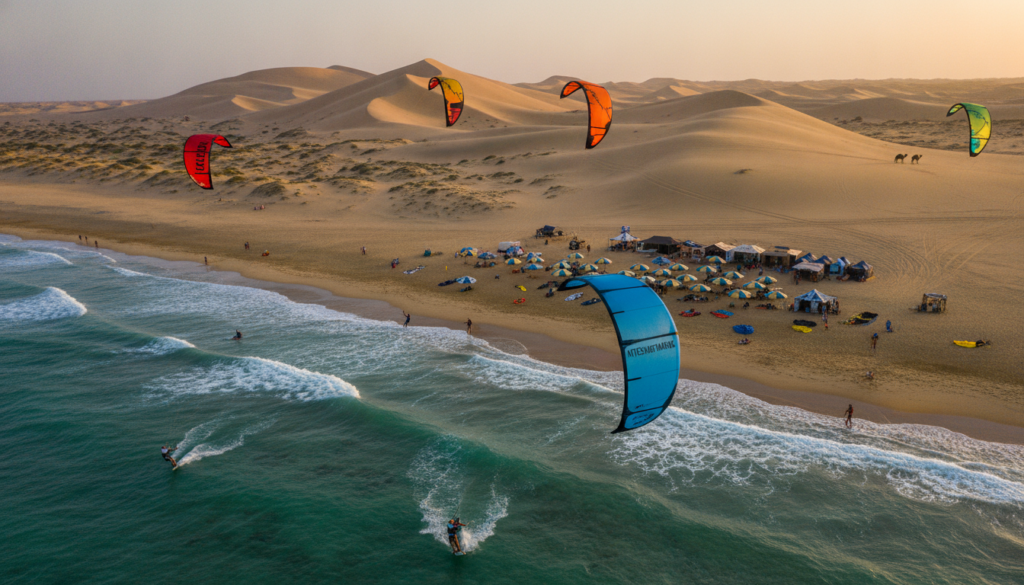
Heading to Dakhla, the Lagoon is a prime spot for beginners, featuring shallow edges and schools for lessons. The Speed Spot offers flat water and offshore winds, while White Dune presents a butter-flat lagoon experience. Oum Lbouer provides Atlantic waves, making it a great choice for those seeking variety.
For accommodation and kite services, check out Paraiso Dakhla, La Tour d’Eole, and Hotel Dakhla Club-KBC. These camps ensure safety and access to the best kite spots.
Understanding Wind, Waves, and Water Conditions
Understanding the elements of wind and water is crucial for an unforgettable kitesurfing experience. Each location in Morocco offers unique conditions that can significantly affect your ride.
Seasonal Wind Patterns and Average Speeds
Essaouira’s average wind speed varies throughout the year. In December, it’s around 13 knots, increasing to 25 knots during the peak months of July and August. The main season typically delivers winds of 15-25 knots, with some days exceeding 35 knots.
Dakhla, on the other hand, experiences winds ranging from 15-35 knots, especially strong from June to August. Knowing these patterns helps riders choose the best days for their adventures.
Water Temperature and Gear Essentials
Water temperatures in Dakhla remain comfortable, ranging from 19-24°C (66-75°F) year-round. For safety and comfort, a long wetsuit is recommended throughout the year, while a shorty may suffice during summer.
Beginners should also consider the lagoon’s changing conditions. As the tide rises, the water can become choppy, while low tide offers a flatter experience. Always check local schools for guidance and lessons to ensure a safe and enjoyable experience.
Travel Tips & Insider Advice for Morocco
Before embarking on your exciting journey, it’s essential to gather some travel tips. Knowing how to navigate the airports and local transportation will enhance your experience. Dakhla Airport is accessible via direct Transavia flights or through a Royal Air Maroc connection from Casablanca. Essaouira has its own airport, but you can also fly into Agadir or Marrakech. Rental cars are handy for reaching Sidi Kaouki and other remote beaches.
Navigating Airports and Local Transportation
When planning your trip, consider that round-trip airfare typically ranges from €250 to €300. It’s wise to carry cash, as the exchange rate is approximately €1 to 11 dirhams. This is especially important for shopping in souks and small shops.
Cultural Etiquette and Safety Guidelines
Morocco is a Muslim country, so visitors should dress modestly and avoid provocative clothing. Public alcohol consumption and nude bathing are frowned upon. Additionally, be cautious with drones, as they may be confiscated at the border if not declared properly.
| Travel Tips | Details |
|---|---|
| Airports | Dakhla: Direct Transavia or Royal Air Maroc; Essaouira: Local airport or Agadir/Marrakech |
| Airfare | €250-€300 round-trip |
| Currency | 1 Euro = 11 Dirhams |
| Drone Regulations | May be confiscated if undeclared |
| Cultural Tips | Dress modestly, avoid public alcohol consumption |
Beyond the Kitesurf: Exploring Morocco’s Rich Experiences
While the thrill of riding the waves is exhilarating, Morocco offers much more. From its rich local cuisine to vibrant markets, there’s plenty to explore when you take a break from kitesurfing.
Start your adventure in Essaouira’s old fort, where colorful markets burst with local flavors. Take a moment to enjoy traditional dishes like couscous and tajines at the food stalls. This is a perfect way to recharge after a day on the beach.
Sidi Kaouki is another gem, known for its laid-back vibe. Here, you’ll find surf shops, small eateries, and even wandering camels. This village offers access to various wave areas, making it an ideal stop for surfers.
Dakhla also has unique activities. When the winds die down, consider a trip to Dragon Island or try your hand at SUP and kayaking. You can also explore an oyster farm or enjoy a ride at the small wake park.
Lastly, don’t miss Imsouane’s La Bay, where rides can stretch up to 3 kilometers. This stunning location is perfect for those looking to extend their Morocco itinerary beyond the main kite spots.
| Experience | Details |
|---|---|
| Essaouira | Explore the old fort and colorful markets; taste local dishes like couscous and tajines. |
| Sidi Kaouki | Relaxed village with surf shops, eateries, and access to various wave areas. |
| Dakhla Activities | Dragon Island excursions, SUP, kayaking, and a small wake park. |
| Imsouane’s La Bay | Rides reaching up to 3 kilometers, ideal for extending your kite adventure. |
Conclusion
Your journey to discover exhilarating wind and waves is just beginning, with endless possibilities on the horizon. Essaouira stands out as a historic and convenient choice, offering accessible beaches and reliable winds from late March to September. Riders can enjoy a variety of coastal wave spots that cater to different skill levels.
Dakhla, with over 300 windy days each year, is perfect for those seeking lagoon sessions and wind speeds that can reach up to 35 knots. Remember, water temperatures ranging from 19-24°C mean planning your wetsuit is essential, even during the warmest months.
Before booking, compare recent accommodation reviews, school safety standards, and launch conditions. For 2026, choose your destination based on skill level, preferred waves or flat water, and comfort expectations. Adventure awaits!